
Sunscreen has a branding problem: for years it was treated like something you packed for a holiday, not something that belonged beside your everyday moisturiser. In reality, sun protection is most useful when it becomes boringly consistent.
UV exposure is not limited to the afternoon you spend at the beach. It can happen during a commute, while walking to lunch, sitting near bright windows or spending time outdoors on an overcast day. That accumulated exposure is why daily sunscreen earns a permanent place in a simple skincare routine.
UVA, UVB and what the label is trying to tell you
SPF primarily describes protection against UVB, the wavelength strongly associated with sunburn. Broad-spectrum protection matters because UVA also contributes to visible photoageing and pigmentation. PA ratings are another way products communicate UVA protection.
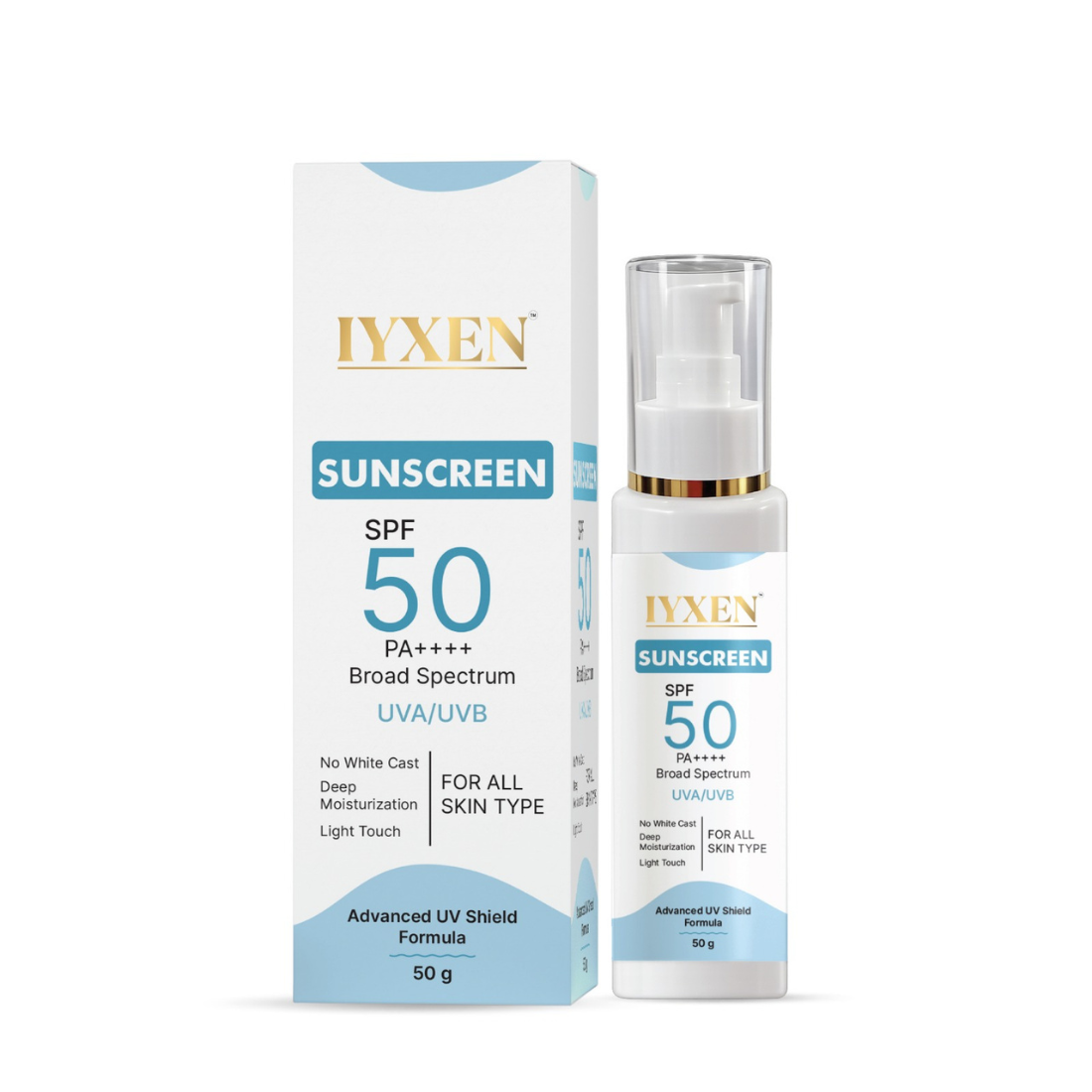
IYXEN offers both an SPF 30 PA+++ face cream and an SPF 50 PA++++ sunscreen, giving you a choice based on how much outdoor exposure you expect and which texture you are most likely to use consistently.
SPF 30 or SPF 50?
The answer is not “the biggest number always wins.” SPF 30 can be a practical everyday option for many people, while SPF 50 gives a higher labelled level of UVB protection and may be preferable for longer outdoor exposure. The more important question is whether you apply enough product and whether you reapply when exposure continues.
A beautifully formulated SPF 50 that stays untouched in a drawer protects less than an SPF 30 you willingly use every morning.
Yes, texture and white cast matter
People are more consistent with sunscreen when it feels comfortable. Heavy, greasy textures or an obvious white cast can be especially frustrating on deeper Indian skin tones. Modern sunscreen shopping should therefore include finish, comfort and how the formula behaves with your moisturiser or makeup, not only the number on the front.
Apply sunscreen as the final step of your morning skincare routine, before makeup. Give it a little time to settle before layering complexion products on top.
How much should you use?
Under-applying is one of the easiest ways to get less protection than the label suggests. Use a generous, even layer across the face and do not forget commonly missed areas such as the ears, hairline, neck and exposed upper chest. Follow the specific directions on your sunscreen packaging for the recommended amount.
Reapplication without turning your day upside down
Reapplication is particularly relevant when you are outdoors for extended periods, sweating, swimming or wiping the face. You do not need to become obsessive about the clock; make it situational. Before a long drive home, an outdoor lunch or an afternoon walk is a natural moment to refresh protection.
Where sunscreen fits with brightening skincare
If you are using products for dark spots or uneven-looking tone, sunscreen is especially important. Brightening routines are trying to improve the appearance of existing unevenness; unprotected UV exposure can work against that goal. Think of treatment and protection as two halves of the same routine.
The best sunscreen is not the one with the most impressive label. It is the one you apply generously, wear comfortably and remember to use again when your day demands it.
Do you need sunscreen indoors?
If you spend the whole day away from windows with essentially no daylight exposure, your situation is different from someone working beside a large window or driving frequently. The practical answer depends on your environment. Building sunscreen into your morning routine removes that daily calculation and covers the moments when plans unexpectedly take you outside.
For prolonged or intense sun exposure, pair sunscreen with sensible physical measures such as shade, hats and protective clothing. No topical sunscreen should be treated as permission to stay in strong sun indefinitely.