
Night skincare has a strange way of becoming complicated. One serum becomes three, a cream becomes a mask, and suddenly the routine you were meant to enjoy feels like homework. The better approach is quieter: remove the day properly, use the treatment your skin actually needs, then moisturise.
Your skin does not switch off when you sleep. Overnight, normal renewal and barrier processes continue while you are away from daytime exposure such as sunlight, pollution, sweat and repeated touching. That makes evening a useful time to focus on comfort, hydration and consistent treatment.
Step one: finish the day with a clean face
Sunscreen, makeup, excess oil and city dust should not become part of your pillowcase routine. Cleanse thoroughly but gently. If you wear heavy makeup or water-resistant sunscreen, you may prefer a first cleansing step followed by your regular face wash. The goal is clean skin, not the tight feeling that comes from over-cleansing.
Step two: choose one main treatment
This is where routines often go wrong. More active ingredients do not automatically mean more progress. If dullness is your priority, you might choose a brightening serum. If excess oil or blemishes are the concern, a clarifying serum may make more sense. If your skin is sensitive or you are new to actives, introduce products gradually and watch how your skin responds.
Using every acid, brightener and renewal ingredient together can make irritation more likely. A calmer routine is easier to troubleshoot because you know what is helping and what is not.
Step three: moisturise like it matters
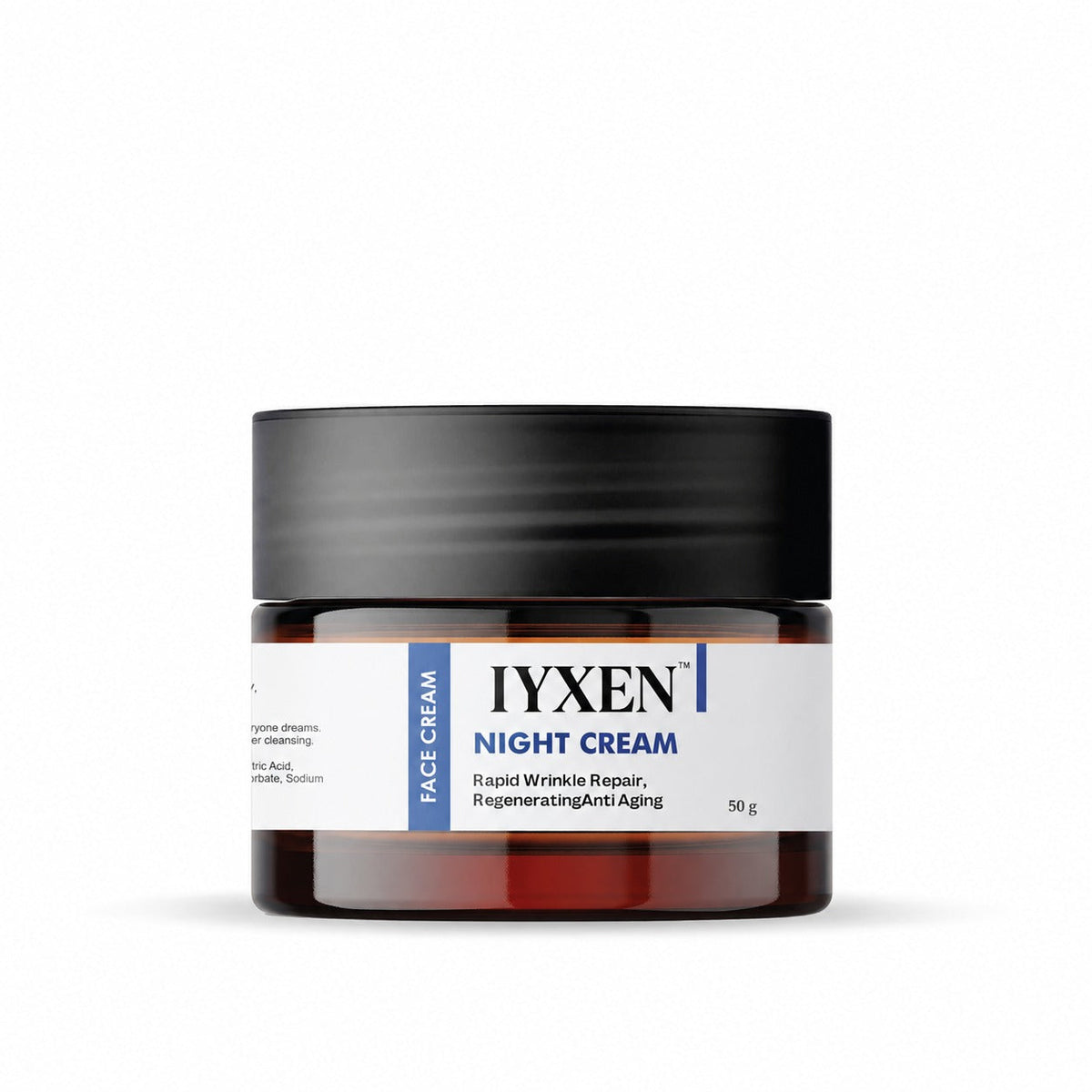
Moisturiser is not simply a final decorative layer. It helps reduce moisture loss and makes a treatment-focused routine feel more comfortable. IYXEN Night Cream is designed as the richer evening step, with ingredients including niacinamide and bakuchiol in its positioning. Bakuchiol is commonly used in cosmetic formulas aimed at smoother, renewed-looking skin, while niacinamide is a familiar multi-purpose skincare ingredient.
If you prefer a more traditional Indian-inspired approach, an Ubtan-based cream can fit into the moisturising step instead. The useful rule is not to stack several creams; choose the one that best matches your skin and texture preference.
What about layering?
Go from lighter textures to richer ones: cleanse, treatment, moisturiser. Allow each layer a moment to settle, but there is no need to stand in front of the mirror with a stopwatch. If a product pills, feels sticky or leaves your skin uncomfortable, simplify before adding anything else.
A realistic night routine for different needs
- Dry or tight-feeling skin: gentle cleanse, hydrating serum if desired, richer night cream.
- Oily or blemish-prone skin: suitable cleanser, one clarifying treatment, light but adequate moisturiser.
- Dull or uneven-looking skin: gentle cleanse, one brightening treatment, moisturiser.
- Reactive skin: keep the routine minimal and introduce new actives one at a time.
Consistency beats a perfect routine
The routine you complete most nights will usually serve you better than an elaborate ritual you manage twice a month. Skin changes gradually. Give a new routine time, keep daytime sunscreen consistent, and resist the urge to replace everything because you did not wake up transformed after four nights.
A useful night routine should make your skin feel cared for and your evening feel simpler, not make you anxious about missing a step.
A final note on sensitivity
Patch test when introducing a new formula, especially if your skin is reactive. If you experience persistent burning, swelling or significant irritation, stop using the product and seek appropriate professional advice. Skincare should support your routine; discomfort is not proof that something is “working.”