
Dark spots are frustrating partly because they arrive quickly and leave slowly. A blemish can settle down in a few days while the mark it leaves behind seems to stay for months. That mismatch often leads people to change serums too soon, layer too many actives, or scrub at pigmentation as if it were sitting on the surface.
It is more useful to think of dark-spot care as a long game: reduce the conditions that keep encouraging uneven pigment, support normal skin renewal, keep the barrier comfortable and protect the skin from UV exposure.
Why a dark spot does not disappear overnight
Visible pigmentation involves melanin within the skin. Cosmetic brightening ingredients can help improve the appearance of uneven tone over time, but they do not work like an eraser. Your skin also renews gradually, so progress is usually measured in weeks rather than mornings.
The exact timeline varies with the depth and cause of the mark, your skin tone, sun exposure, consistency and the products you use. That is why rigid promises such as “seven days to spotless skin” deserve healthy scepticism.
Ingredients you will often see in brightening routines
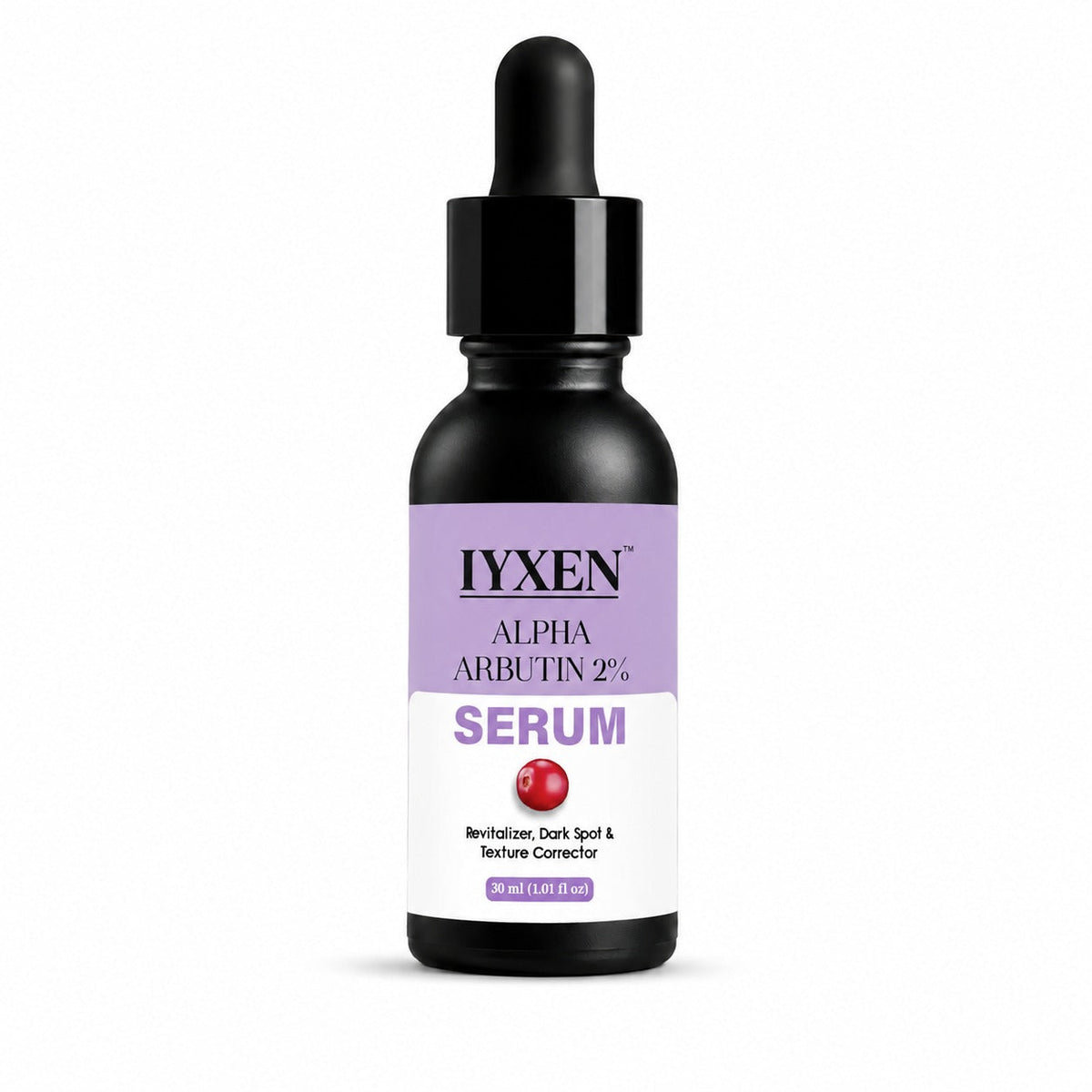
IYXEN's pigmentation-focused products use combinations of familiar brightening ingredients. Alpha arbutin is commonly used to support more even-looking tone. Niacinamide is a versatile ingredient often included for barrier support and the appearance of unevenness. Kojic acid and vitamin C derivatives also appear in brightening formulas, while humectants such as hyaluronic acid and glycerin help maintain hydration.
The useful point is not to collect every one of them in separate bottles. A well-designed combination formula can be easier to use consistently than building a complicated stack yourself.
Serum first, patience second
Apply your chosen serum according to its directions, usually after cleansing and before moisturiser. If you are new to brightening actives or your skin is sensitive, start gradually. More frequent application is not automatically better if it leaves your barrier irritated.
Take a photo in the same lighting when you begin. Checking the mirror several times a day makes slow progress almost impossible to notice; comparing consistent photos every few weeks gives you a more realistic view.
Sunscreen is part of the dark-spot routine
UV exposure can deepen the appearance of pigmentation and make an even-looking complexion harder to maintain. That is why a brightening serum without daily sun protection is an incomplete strategy. Apply broad-spectrum sunscreen every morning and reapply when your exposure requires it.
What not to do
- Do not scrub aggressively at a mark.
- Do not introduce several strong actives at once just because progress feels slow.
- Do not pick at active blemishes; this can make post-blemish marks more noticeable.
- Do not judge a new routine after only a handful of applications.
A straightforward routine
Morning: gentle cleanse, brightening serum if suitable for daytime use, moisturiser as needed, sunscreen.
Evening: cleanse, your chosen treatment, moisturiser. If you also use exfoliating acids, introduce them thoughtfully rather than automatically combining everything every night.
With pigmentation, “slow and steady” is not a consolation prize. It is usually the most skin-friendly way to get to a more even-looking result.
When to ask for professional help
Not every dark patch is ordinary post-blemish pigmentation. If a mark changes rapidly, is associated with other symptoms, or you are unsure what you are treating, a dermatologist can assess it properly. Cosmetic skincare works best when you know the concern you are actually addressing.